


On Nov. 13, 2026, the Air Force said the B-21 Raider had released a conventional weapon during a test flight from Edwards Air Force Base, California. It did not say which weapon it was or when the drop happened.
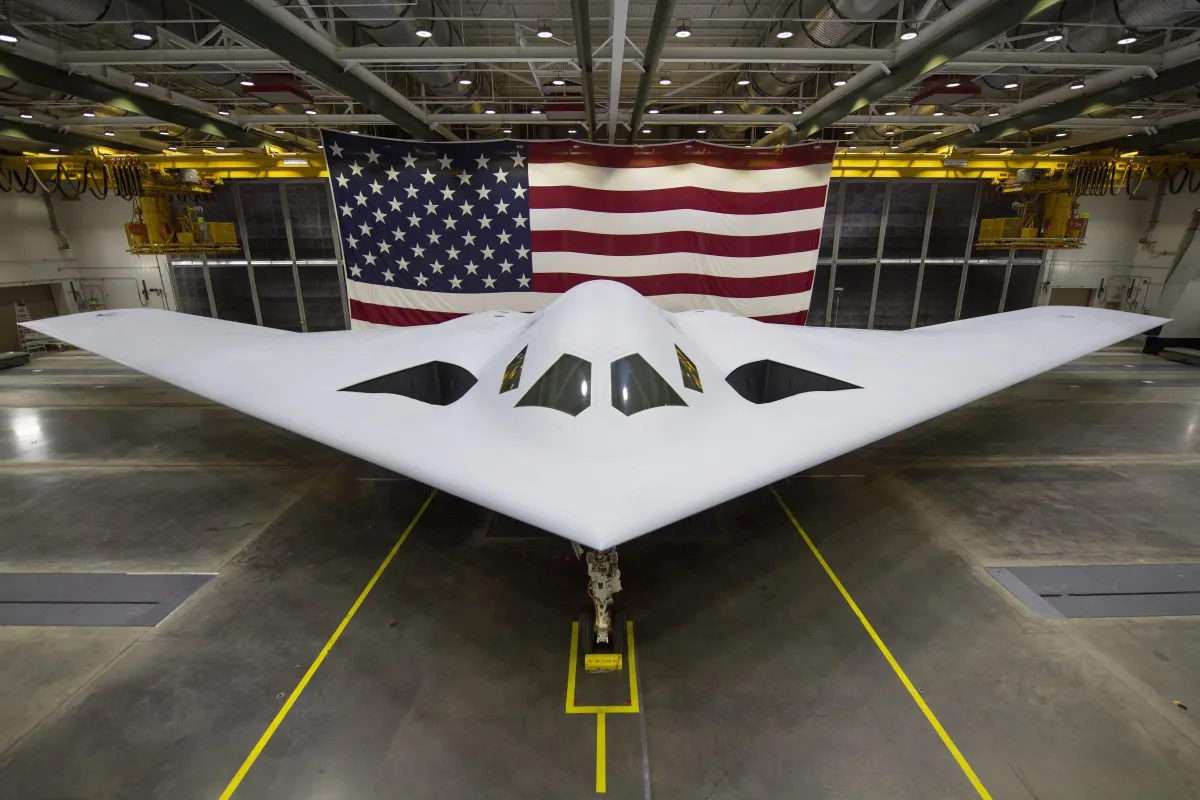
That secrecy is the whole point of the plane. The B-21 was unveiled on Dec. 2, 2022, and as of late November 2026 the Air Force has not published its range, payload or top speed. Here is what is confirmed, what is only an estimate, and what nobody outside the program knows.
What the Air Force has confirmed
The public record is short, and it moves in steps.
- Dec. 2, 2022: The B-21 is unveiled at Air Force Plant 42 in Palmdale, California. Six aircraft are in various stages of construction.
- Nov. 10, 2023: First flight. It takes off from Palmdale around 7 a.m. and lands at Edwards about 90 minutes later, with an F-16 chase plane alongside. Nobody announced it beforehand.
- January 2024: The low-rate initial production contract is awarded.
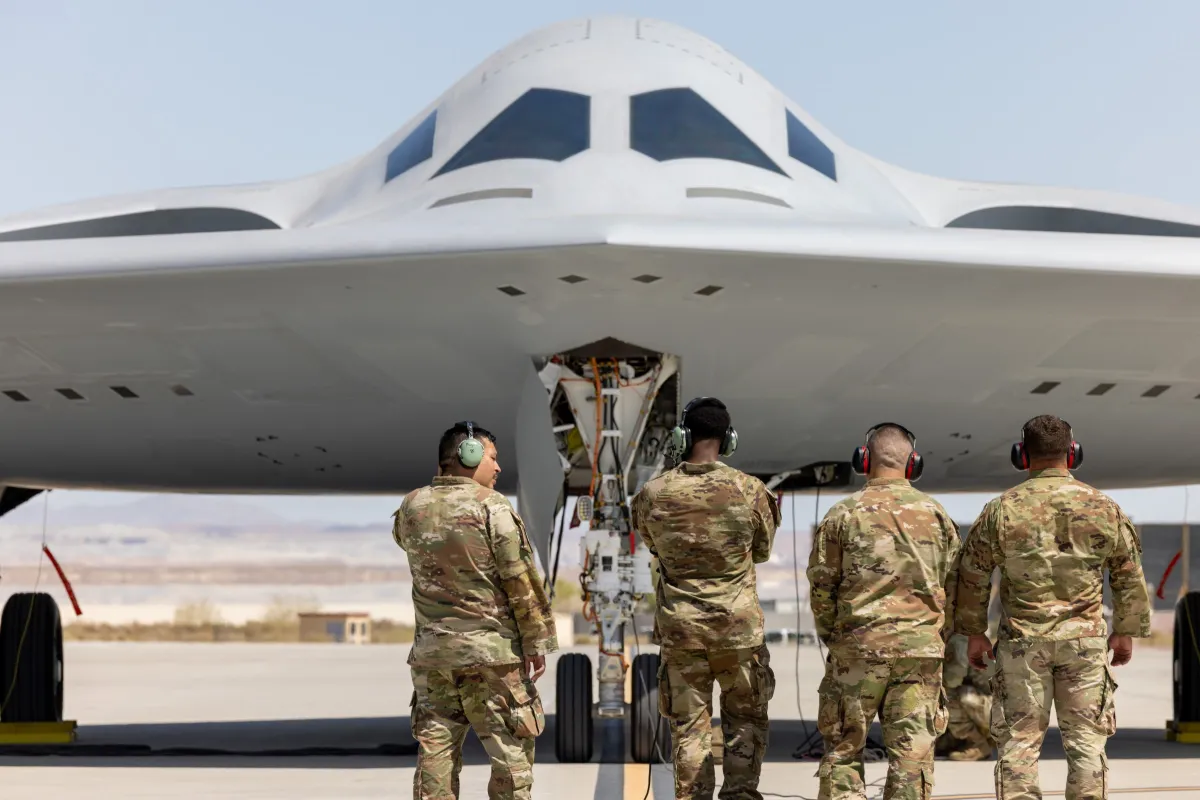
- Sept. 11, 2025: A second test aircraft arrives at Edwards to expand mission-systems and weapons testing.
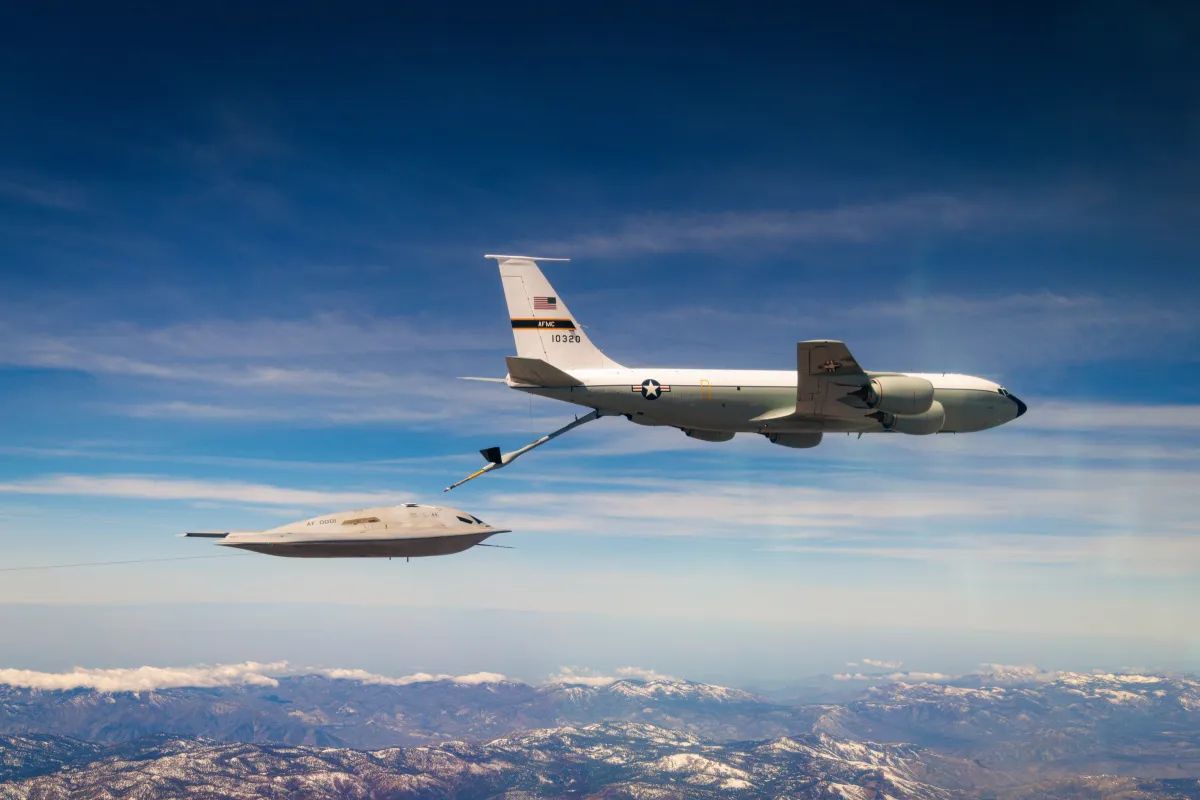
- Mar. 10, 2026: First aerial refueling, a flight of 5 hours 33 minutes over eastern California. The Air Force acknowledged it on Apr. 14.
- Nov. 13, 2026: The weapon-release test is announced, and the Air Force calls the B-21 a validated weapons platform.
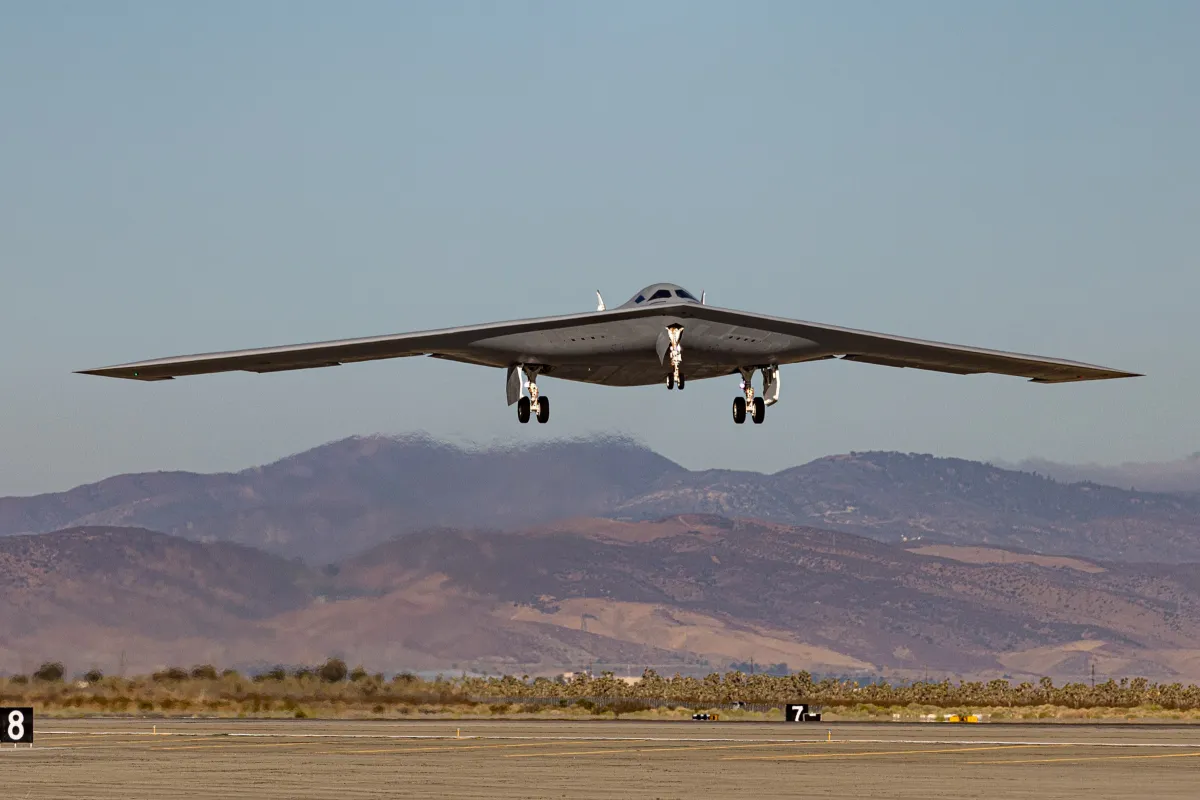
The test campaign is run by the Air Force Test Center and the 412th Test Wing's B-21 Combined Test Force. The Air Force has said the test aircraft will be converted to operational configuration after testing, so none of them is a throwaway prototype. The second aircraft also trains the people who will keep the fleet flying: Airmen from the 912th Aircraft Maintenance Squadron handled its arrival, and the Air Force says that gives maintainers hands-on experience with the tools, data and processes future squadrons will use.
Production is moving too. In February 2026 the Air Force and Northrop Grumman agreed to raise annual production capacity by 25 percent, using $4.5 billion from 2025 reconciliation legislation. The first operational aircraft is due at Ellsworth Air Force Base, South Dakota, in 2027.
B-21 versus B-2: what can be compared
Northrop Grumman calls the B-21 the world's first sixth-generation aircraft. Like the B-2 Spirit it is a flying wing, and Northrop CEO Kathy Warden has said it is slightly smaller, to increase range. Past that, only the B-2 has published numbers.
| Feature | B-2 Spirit | B-21 Raider |
|---|---|---|
| First flight | July 17, 1989 | Nov. 10, 2023 |
| Crew | 2 | Not published |
| Wingspan | 172 ft (52 m) | Not published; slightly smaller than the B-2, per Northrop |
| Payload | Up to 40,000 lb (18,000 kg) | Not published |
| Unrefueled range | About 6,000 nautical miles (11,100 km) | Not published |
| Fleet | About 20 operational aircraft; early plans called for 132 | At least 100 planned |
| Cost | About $44.4 billion for 20 aircraft, in then-year dollars (GAO, 1995) | $692 million average procurement cost per aircraft, in 2022 dollars (Air Force) |
Do not line up the two cost rows and divide. The B-2 figure includes development. The Air Force's $692 million is a procurement average, which by definition leaves out the money spent designing the bomber. Bloomberg estimated the whole B-21 program at $203 billion over 30 years.
What nobody outside the program knows
- Performance. Range, payload, top speed and stealth performance are not disclosed.
- Numbers. The Air Force has not said how many B-21s are in production. At least 100 is its long-standing target, and the total it plans to buy is classified.
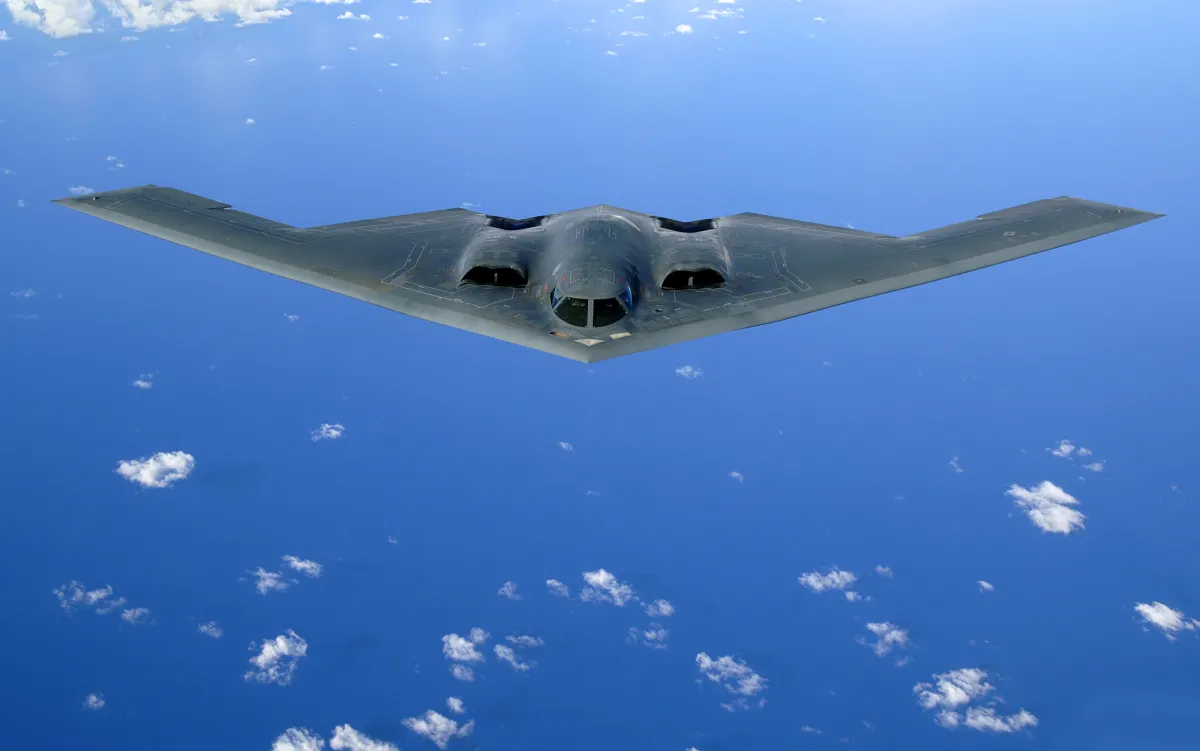
- The weapon. All we have is “conventional.” The photo released with the announcement shows the second test aircraft.
- The price. The $692 million is an Air Force average. The $203 billion is Bloomberg's estimate, not an official figure.
The secrecy showed at the reveal. Three older bombers, the B-52, B-1 and B-2, flew over first. Then the hangar doors opened and the B-21 was towed only partway out, with its sensitive parts kept inside the hangar. The B-2 had rolled out fully in the open in 1988. Warden called what you don't see “the magic of the platform.”
What comes next
The Air Force plans to retire the B-1 and B-2 by the early 2030s and fly the B-21 alongside upgraded B-52s. Ellsworth is the first base and training site, with Whiteman in Missouri and Dyess in Texas to follow. Northrop recently opened a 265,000-square-foot manufacturing facility in Layton, Utah, and is adding a million square feet of final assembly space at Plant 42.
The weapon-release test is the step between a plane that flies and a bomber that fights, and the Air Force says the B-21 is now past it. Everything else, from how far it flies to how many exist, is still behind the curtain.
Sources
- Defense News, Dec. 3, 2022
- CBS News, Dec. 2022
- Air & Space Forces Magazine, Nov. 10, 2023
- Military Times, Feb. 24, 2026
- DefenseScoop, Nov. 13, 2026
- The Aviationist, Nov. 13, 2026
- Northrop Grumman, B-21 Raider page
- The Defense Post, B-2 Spirit guide, July 19, 2026
- U.S. Government Accountability Office, B-2 Bomber: Status of Cost, Development, and Production (Aug. 1995)
- DVIDS, arrival of second B-21 test aircraft (Sept. 11, 2025)