


Lasers can now burn a drone out of the sky for the price of a little electricity, and the U.S. Navy said so back in 2014. Yet a dozen years later no navy has a laser on every ship, because each laser hits one target at a time, has to stare at it for seconds, and loses punch in bad weather.
That is a big deal, because the math of drone warfare is brutal. A Royal Navy Type 45 destroyer carries 48 anti-aircraft missiles that cost more than $1.3 million apiece. Britain says one DragonFire laser shot costs about $13.
Here is what four laser weapons have really done so far, and where the claims run ahead of the proof.
| LaWS (USS Ponce) | 30 kilowatts; declared operational in the Persian Gulf on Dec. 10, 2014 |
|---|---|
| HELIOS (USS Preble) | 60-kilowatt class; took out a target drone in fiscal 2024 testing |
| DragonFire (Britain) | Shot down drones flying up to 400 mph (650 km/h) in trials; fitting to a Type 45 destroyer planned by 2027 |
| Iron Beam (Israel) | Range about 6 miles (10 km); delivered Dec. 28, 2025; combat use disputed |
2014: A laser goes to sea on the USS Ponce
On Dec. 10, 2014, the Navy announced that its Laser Weapon System, or LaWS, was operational aboard the USS Ponce in the Persian Gulf. The system was a $40 million, 30-kilowatt prototype. The Navy had been testing it there since the summer, and Rear Adm. Matthew Klunder, then the Navy's chief of naval research, said it was no longer sitting in a box waiting for a special occasion.
The Navy released video of the laser hitting targets on a speeding boat and shooting down a drone. It said Ponce sailors had cut the time to kill a drone to less than two seconds, and it put the cost at less than $1 a shot. One report counted $0.59 of electricity.
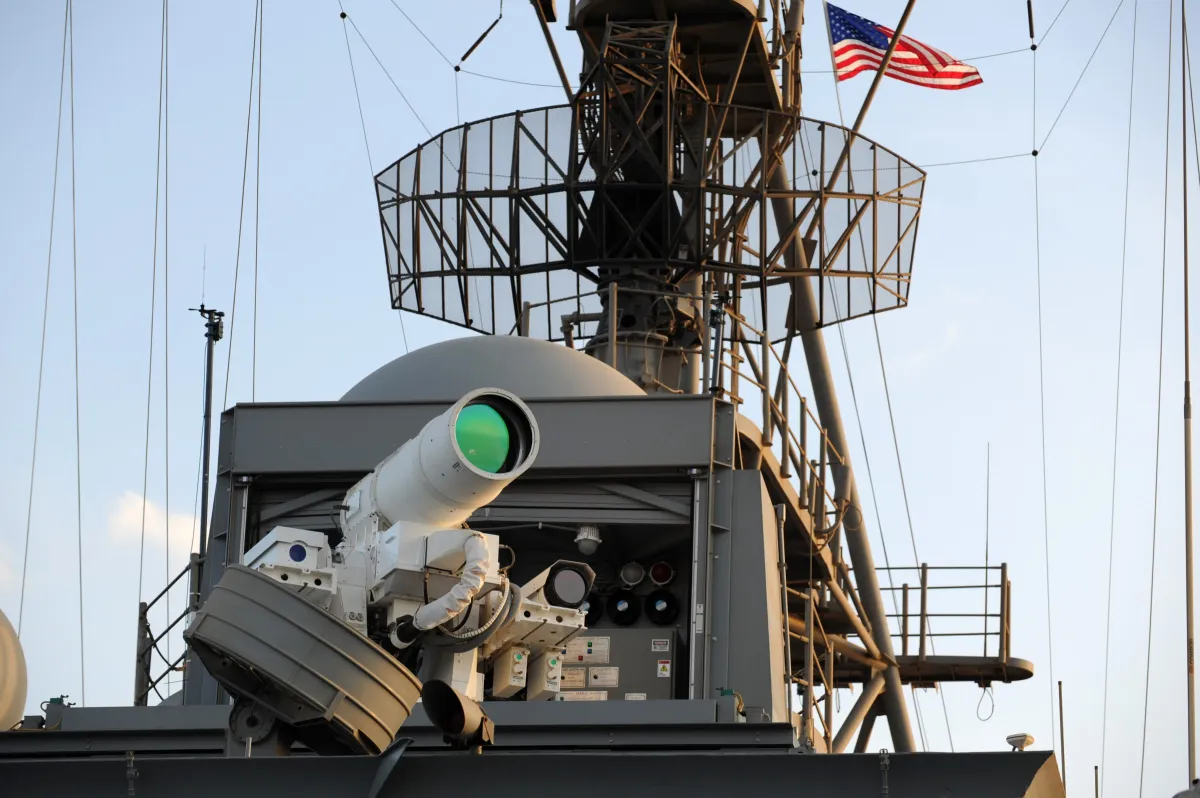
There was a catch. At the time of the announcement, sailors had not yet fired the laser at a real enemy target.
2024: HELIOS on the USS Preble
The next step was HELIOS, a 60-kilowatt-class laser that Lockheed Martin delivered to the Navy in August 2022. The name stands for High-Energy Laser with Integrated Optical Dazzler and Surveillance. It sits on the destroyer USS Preble, the only Navy ship that carries it.
The Pentagon's testing office disclosed in a report released in early 2025 that Preble used HELIOS to take out an aerial target drone in fiscal 2024. The report gave no date or place for the shot.
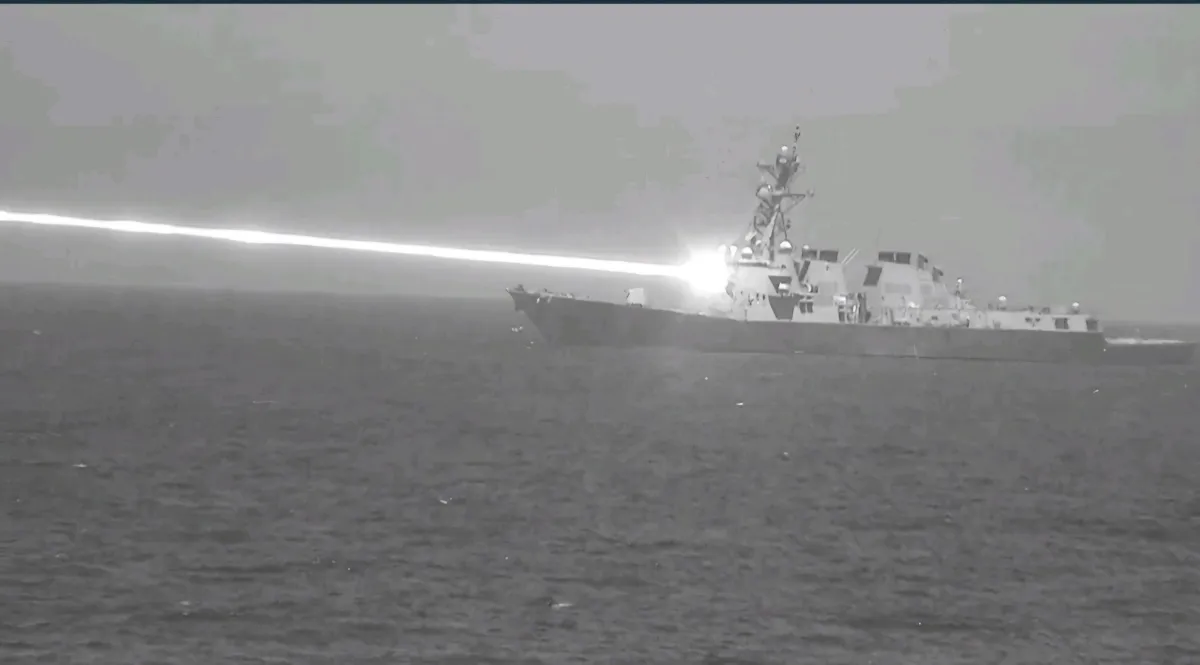
In January 2026, Lockheed's chief executive said Preble neutralized four drones at sea in a demonstration the previous fall. The Navy has not said how fast the ship switched targets or how long each drone took to kill.
DragonFire: Britain's $13 shot
In January 2024, Britain's Ministry of Defence announced the UK's first high-power laser firing against aerial targets, at the Hebrides Range in Scotland. It put the cost at under £10 per shot. The range is classified.
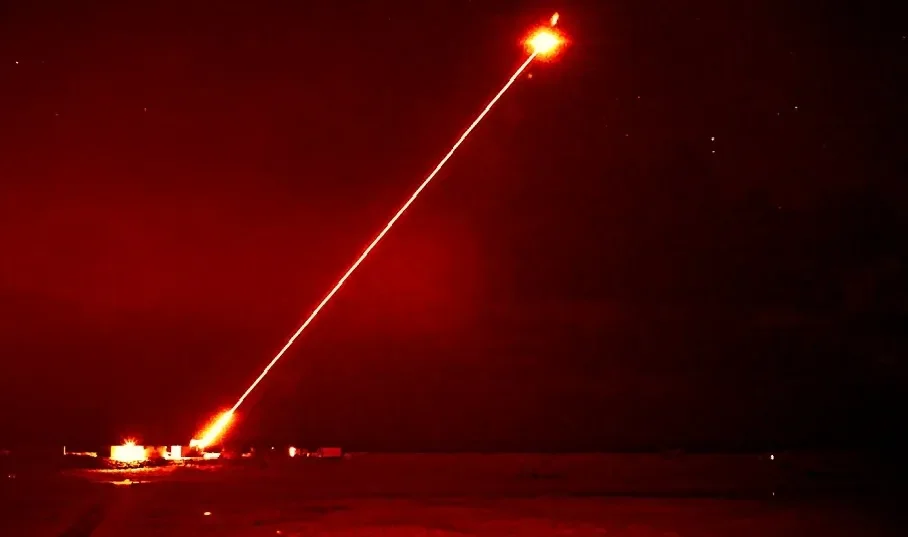
On Nov. 20, 2025, the ministry said new trials at the range shot down drones flying up to 400 mph (650 km/h), including above-the-horizon targets. It also announced a £316 million ($413 million) contract with MBDA UK. DragonFire is due on a Type 45 destroyer by 2027, five years sooner than planned. Press reports put its power at 50 kilowatts, but that figure is not in the ministry's statements.
Iron Beam: declared operational, then barely used
Israel's Defense Ministry and Rafael declared Iron Beam operational in September 2025 after a series of operational tests. On Dec. 28, 2025, the Israeli military placed the first high-power system into service. Defense estimates give it a range of about 6 miles (10 km). Officials say each interception costs a few shekels, while a single Iron Dome interceptor costs about $50,000.
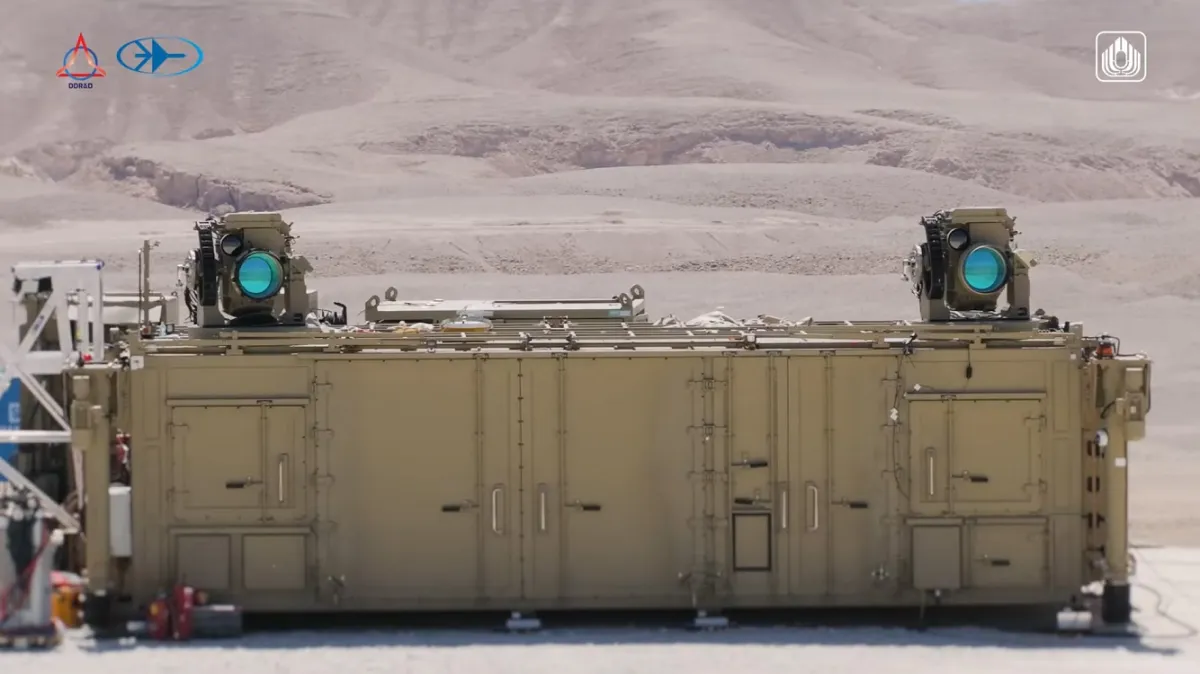
The combat record is thinner than the headlines. Israel says lower-powered laser versions shot down about 35 to 40 Hezbollah drones in October 2024. But in March 2026, Calcalist reported that Iron Beam had not been used operationally in the war then under way, and the Jerusalem Post called its use negligible.
By August 2026, Rafael told Calcalist the system had not yet completed the steps needed to become operational. An industry official said full maturity was three to four years away. A former air defense commander said the promised $5 per interception would be very difficult to reach once development costs are counted.
Why isn't every ship using one?
The limits are physical. A laser engages one target at a time and must hold its beam on the target. Power and heat limit back-to-back shots. Weather, smoke and dust weaken the beam, and rough seas and salt spray are hard on the equipment.
Money is the other problem. According to the Pentagon's testing report, the Defense Department spends about $1 billion a year on high-energy lasers and high-power microwaves without the results Navy leaders want.
So the cheap shot is real, but the cheap defense is not here yet. Today a laser is a bonus layer, not a replacement for the missile.
Sources
- Live Science, "Futuristic Laser Weapon Ready for Action, US Navy Says" (Dec. 2014)
- CBS News, Navy laser weapon deployed aboard ship for the first time (Dec. 11, 2014)
- Breaking Defense, "Star Wars At Sea: Navy's Laser Gets Real" (Dec. 10, 2014; Internet Archive copy)
- The War Zone, Navy HELIOS laser aboard USS Preble zaps drone in latest test (Feb. 2025)
- Military Times, "US Navy hits drone with HELIOS laser in successful test" (Feb. 4, 2025)
- The War Zone, USS Preble used HELIOS laser to zap four drones (Feb. 2, 2026)
- UK Ministry of Defence, "Advanced future military laser achieves UK first" (Jan. 19, 2024)
- Defence Equipment and Support, DragonFire contract and drone trials (Nov. 20, 2025)
- The Register, DragonFire laser to be fitted to Royal Navy ships (Nov. 24, 2025)
- Calcalist CTech, Israel deploys Iron Beam laser system (Dec. 28, 2025)
- The Jerusalem Post, Iron Beam operational announcement (Sept. 2025)
- Calcalist CTech, Iron Beam remains unused despite renewed drone threat (Mar. 8, 2026)
- The Jerusalem Post, Iron Beam's limits exposed as Hezbollah drones breach northern Israel's skies (Mar. 12, 2026)
- Calcalist CTech, Iron Beam still isn't operational (Aug. 2026)