


The U.S. military really did build a bomb out of live bats. It worked a little too well: during a 1943 test, the bats got loose and set fire to buildings on an Army airfield in New Mexico, and the secret project died before a single bat reached Japan.
The idea came from a Pennsylvania dentist, won the approval of President Franklin D. Roosevelt, and cost about $2 million. The plan was simple and chilling. Chill thousands of bats into a deep sleep, clip a tiny firebomb to each one, drop them over Japanese cities, and let them wake up and roost under the rooftops.
Here is how one of the strangest weapons of World War II almost became real, and why it was killed.
A dentist, a cave and a wild idea
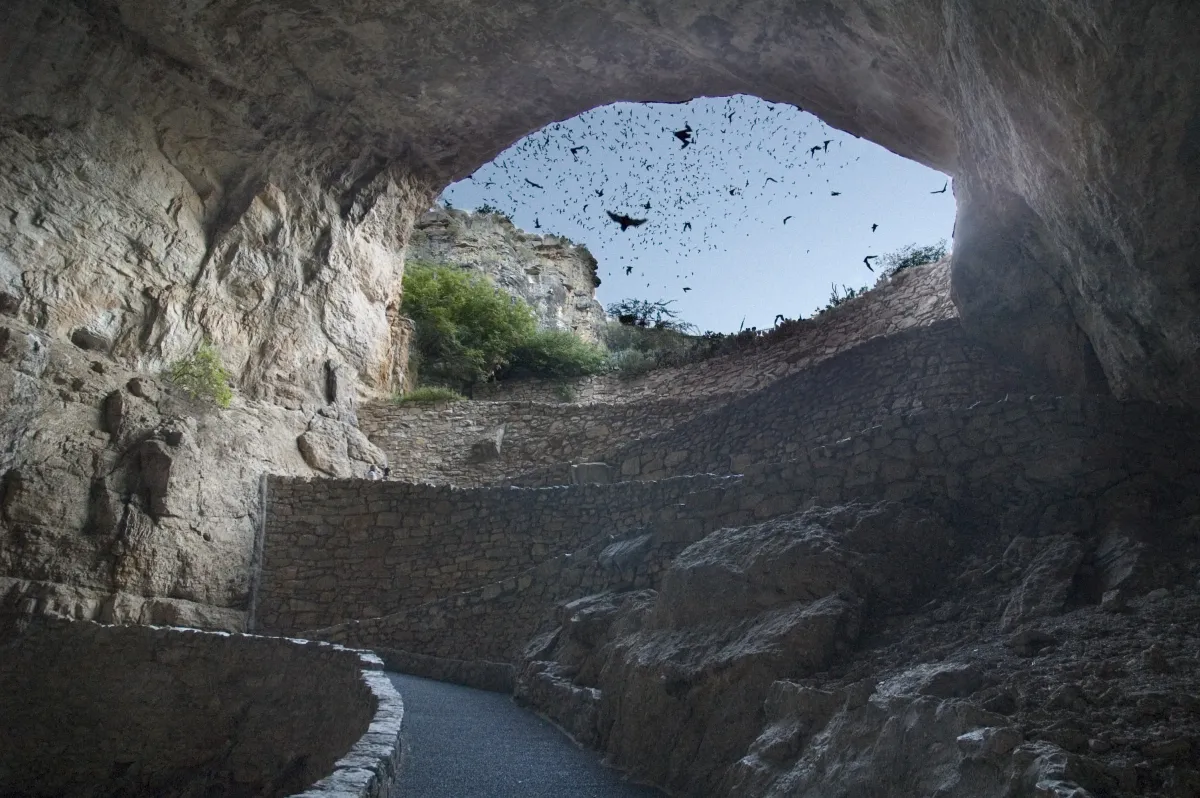
Lytle S. Adams, a dental surgeon from Irwin, Pennsylvania, was in the Southwest when news of Pearl Harbor broke on Dec. 7, 1941. He had just seen the bats of Carlsbad Caverns. On Jan. 12, 1942, he sent a proposal to the White House. A scientific review passed it along, and Roosevelt approved it.
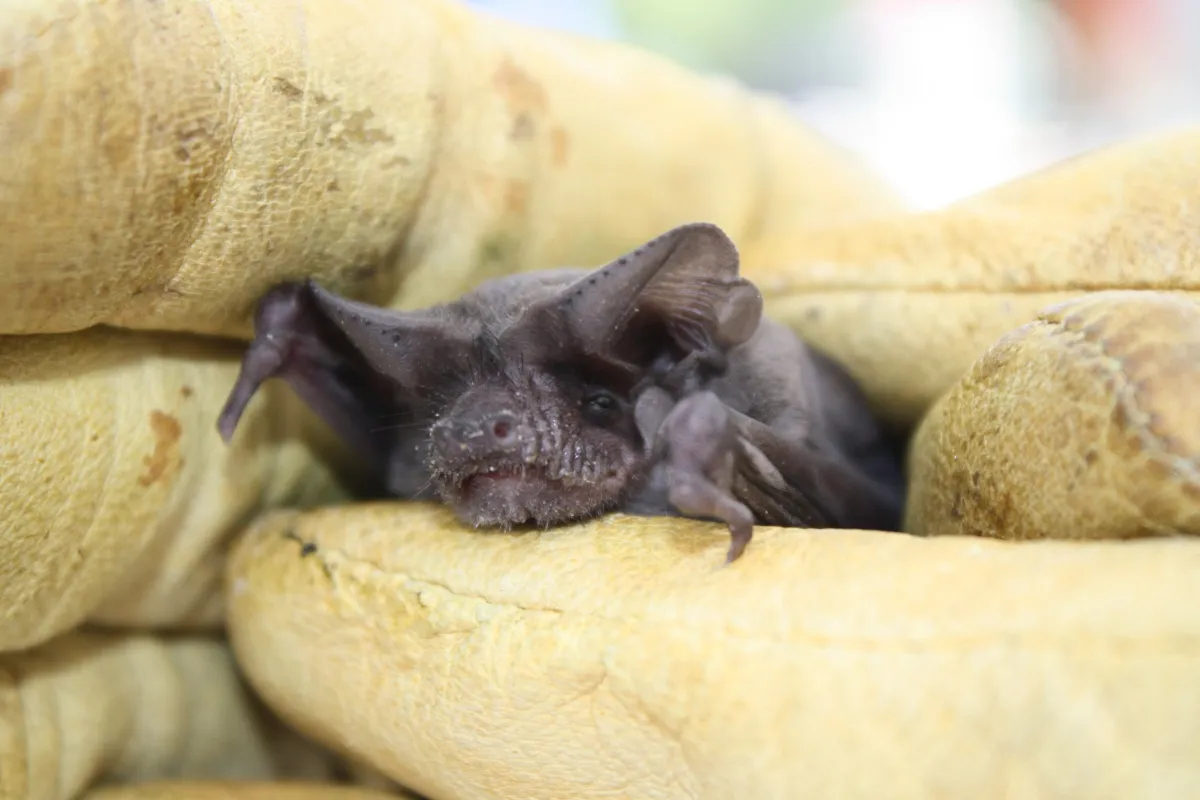
The team settled on the Mexican free-tailed bat. A bat weighs about a third of an ounce (10 grams), yet it can fly with a payload of roughly 0.5 to 0.6 ounce (15 to 18 grams). Supply was no problem: Ney Cave near Bandera, Texas, held an estimated 20 to 30 million of them.
Harvard chemist Louis Fieser, who had worked on napalm, helped design the firebomb. It weighed about 0.6 ounce (17 grams). The timer was clever: a copper chloride solution slowly ate through a steel wire, and when the wire snapped, a spring-loaded pin fired the igniter. Handlers attached each bomb to the skin of a bat's chest with a surgical clip and a string.
How a bat bomb was supposed to work
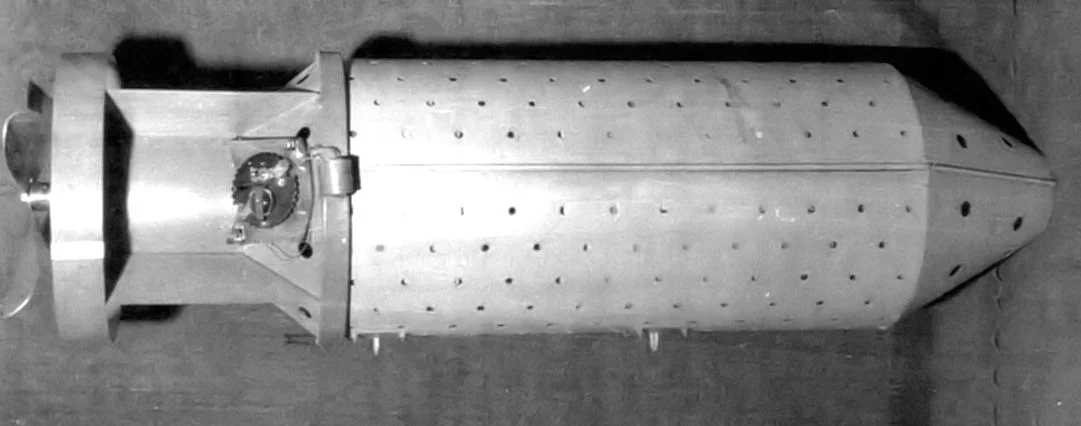
The bats had to be asleep for the trip, so crews chilled them into hibernation. Then they were loaded into a canister that held more than 1,000 animals, roughly 1,030 to 1,040 depending on the account.
A bomber would drop the canister from high altitude. A parachute slowed the fall while the bats warmed up and woke. At about 1,000 feet (300 m), the canister opened and the bats scattered to roost in eaves, attics and wooden walls. Then the timers ran out.
| Official name | Project X-Ray (Navy name, from August 1943) |
|---|---|
| Carrier animal | Mexican free-tailed bat |
| Firebomb weight | About 0.6 ounce (17 grams) |
| Bats per canister | More than 1,000 |
| Opening altitude | About 1,000 feet (300 m) |
| Bomber load | 25 canisters on a B-25, nearly 26,000 armed bats |
| Cost | About $2 million |
The day the bats burned Carlsbad
The first drops flopped. In May 1943, five drops from a B-25 over Muroc Lake, California, mostly ended with bats that never woke up. They hit the ground and died.
The team moved to a new auxiliary airfield near Carlsbad, New Mexico, close to the bat caves. This time the bats woke up. In the New Mexico sun, they flew off with incendiaries on delay timers of about 15 minutes and dived into the base's own buildings.
Barracks burned first. The control tower became what one account calls a huge candle visible for miles. Hangars and offices followed. Because the project was secret, the site had no fire crews on hand. When the base commander showed up with three fire engines, guards refused to open the gates.
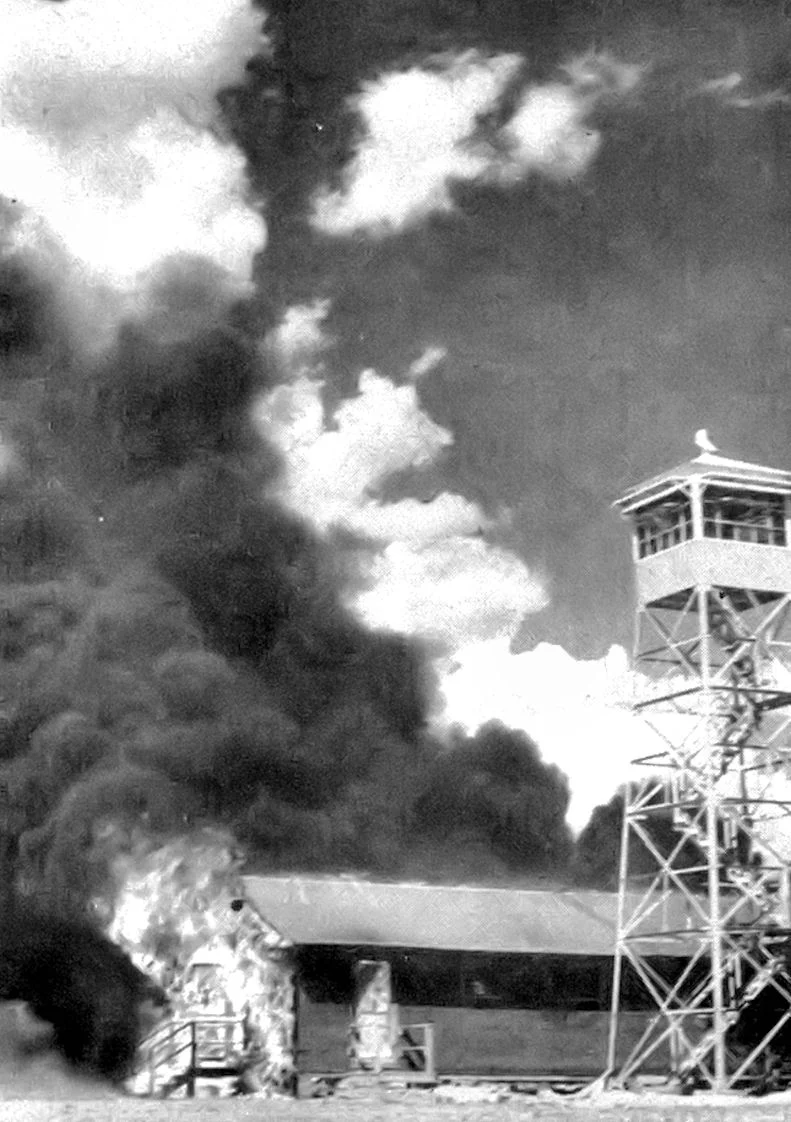
Accounts disagree on how much burned. The National Park Service says most of the base's facilities went up in flames. A Stars and Stripes retelling of a 1968 local newspaper story says part of the base burned, along with the building that held Adams's records. Either way, the Army had set fire to itself.
In another test, a village of mock Japanese buildings burned to the ground.
Why the project died
The Army walked away. In August 1943, the Navy took over and renamed the project X-Ray. By December 1943 it belonged to the Marine Corps. In the first Marine experiments on Dec. 13, 1943, the bats started 30 fires. Twenty-two went out. Four were serious enough to need professional firefighters.
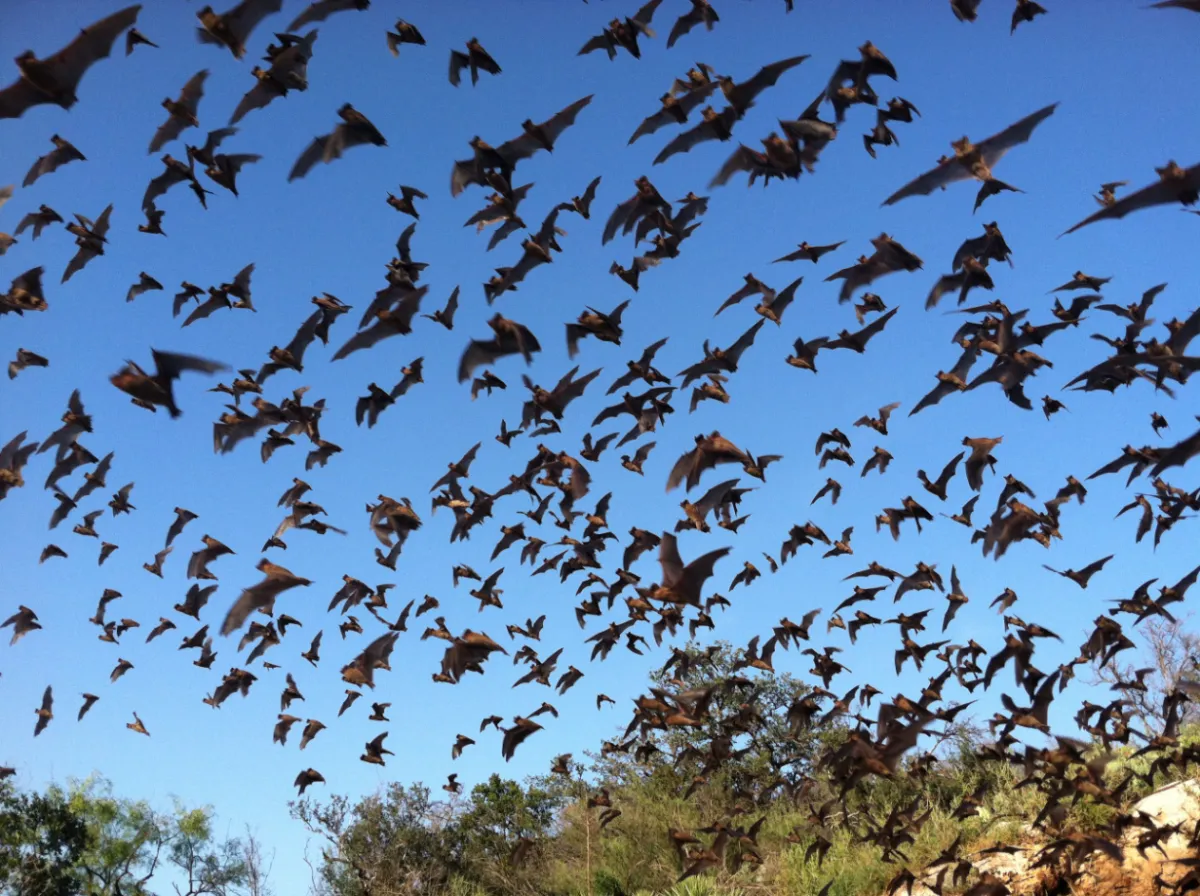
Marines also tested the idea on replica Japanese and German villages at Dugway, Utah. Fieser estimated that bats would start fires about 3.7 times more efficiently than ordinary gravity bombs.
It still did not matter. Full-scale tests were planned for August 1944. Then Fleet Adm. Ernest J. King, the Chief of Naval Operations, heard that the bats would not be combat-ready until mid-1945, and he canceled the program. Military leaders in Washington formally terminated it in October 1944. A government chemist cited the uncertainty of how animals behave as a reason for the doubts.
Adams later guessed that the atomic bomb killed his project. He believed bat fires could have devastated Japan with little loss of life. More than 6,000 bats were used in the Army's experiments alone.
The bat bomb could start fires. The trouble was that nobody could tell the bats where to start them, and the one famous test proved it.
Sources
- Air & Space Forces Magazine, "The Bat Bombers"
- HistoryNet (Robert M. Neer, adapted from "Napalm: An American Biography"), "Behind the Lines: Bats Out of Hell"
- National Park Service, "Bat Bombs and Balloons on Fire: Bizarre Occurrences in WWII National Parks"
- Stars and Stripes (El Paso Times), "Bat bombs: Secret WWII weapon tested in New Mexico desert"
- KSAT, "Bat bombs: a weird, disturbing WWII weapon that used South Texas bats"
- Jack Couffer, "Bat Bomb: World War II's Other Secret Weapon" (University of Texas Press, 1992), Internet Archive record