


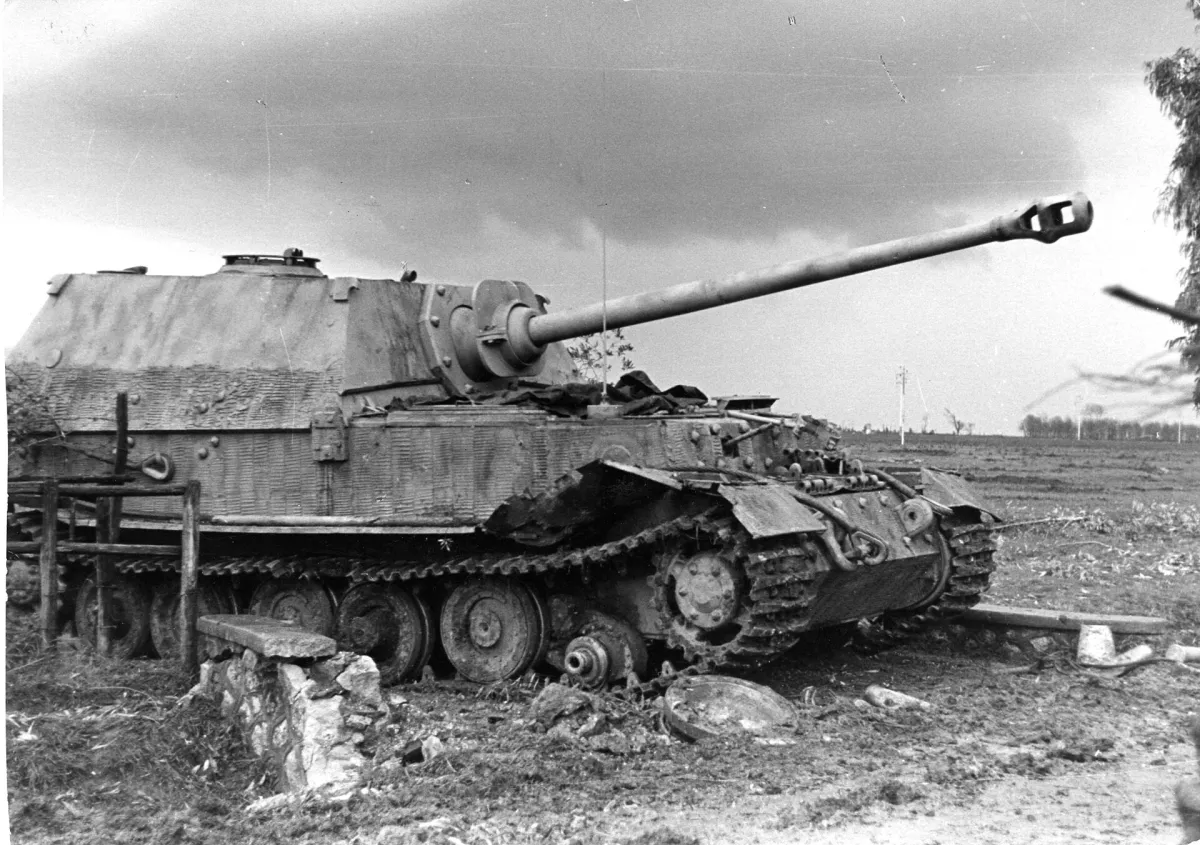
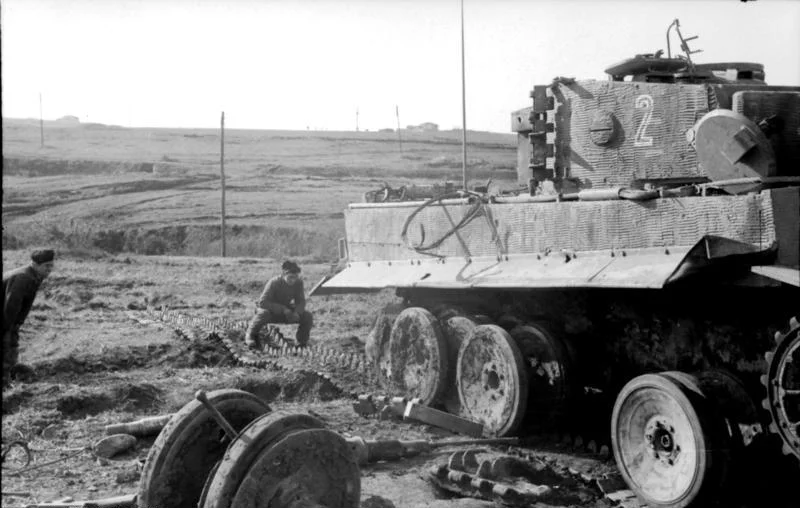
German tanks looked scarred because Berlin was afraid of its own invention. In 1942 the Wehrmacht fielded a magnetic bomb that soldiers could slap onto a tank, and planners feared the Allies would copy it. So they plastered their armor with Zimmerit, a ridged paste that weighed as much as 440 pounds (200 kg) on a single Tiger I.
Then, in September 1944, they stopped. The reason was a fire rumor that testing did not support, and the Allies never fielded the weapon the paste was built to stop.
The magnetic bomb that spooked Berlin
The Hafthohlladung ("sticky hollow charge") went into production in May 1942. It was a shaped-charge grenade on a plywood base with three horseshoe magnets. The 3 kg version weighed about 7.7 pounds (3.5 kg) and could punch through roughly 5 inches (130 mm) of armor. A soldier had to sneak up to a tank, stick it on, pull the knob and run. Germany built about 547,000 of them, and roughly 10,000 gold tank-destruction badges were handed out through 1944, mostly for kills involving this weapon, though exact counts were not kept.
The weapon worked, and that was the problem. German planners assumed the enemy would soon build their own. According to the history compiled by researcher Christian Ankerstjerne at Panzerworld, the Army Weapons Office tested five defenses in January 1943. Only poured concrete mixed with fine rubble looked useful. Oil-based coatings were rejected as a fire risk.
The winner was a putty from Chemische Werke Zimmer of Berlin. Zimmer's material was first tested at Kummersdorf on June 5 and 8, 1943, and troop trials with the 4th and 7th Panzer Divisions were approved on June 30.
How the paste went on
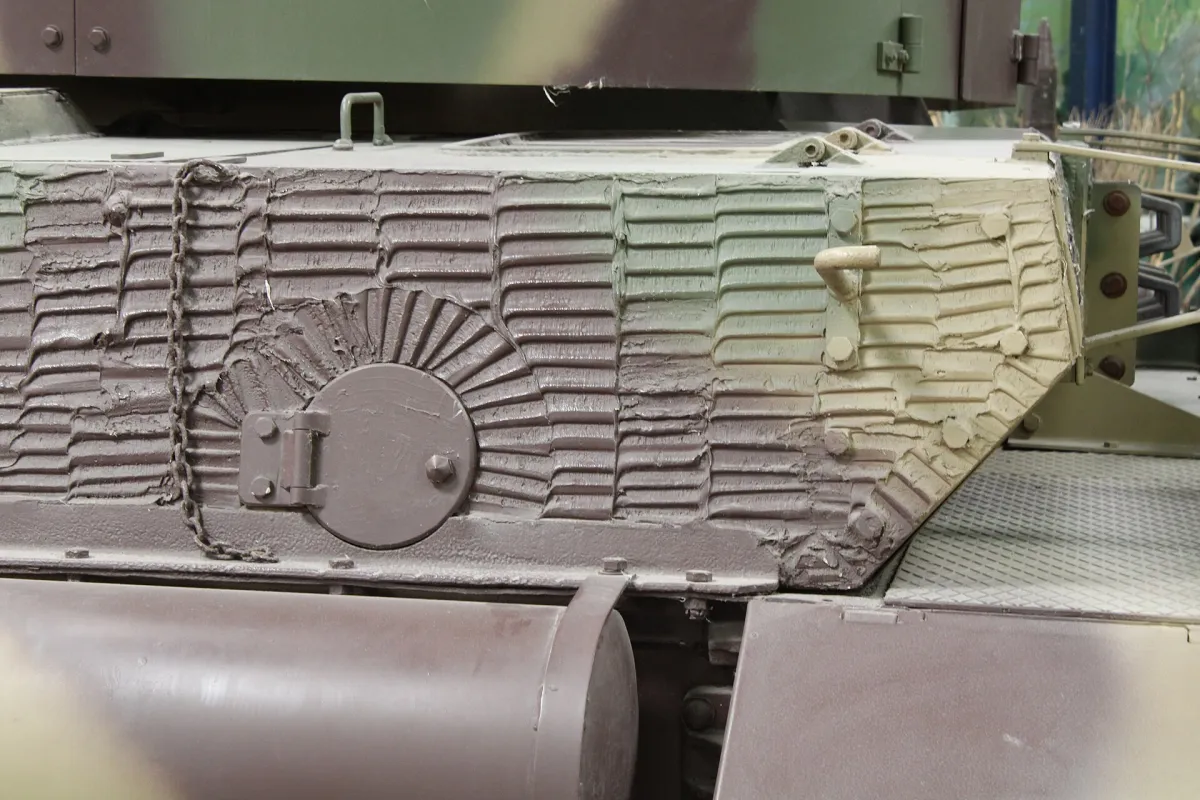
Zimmerit was a mix of barium sulfate, polyvinyl acetate glue, ochre pigment, zinc sulfide and sawdust, dissolved in a solvent called benzene. Workers troweled it on in layers, about a quarter inch (6 mm) in total, according to The Tank Museum. Then they torched it to harden it, and pressed the ridges in with spatulas or stamps. Panzerworld puts the full cycle at four hours of drying, a torch pass, shaping, and about six more days of drying.
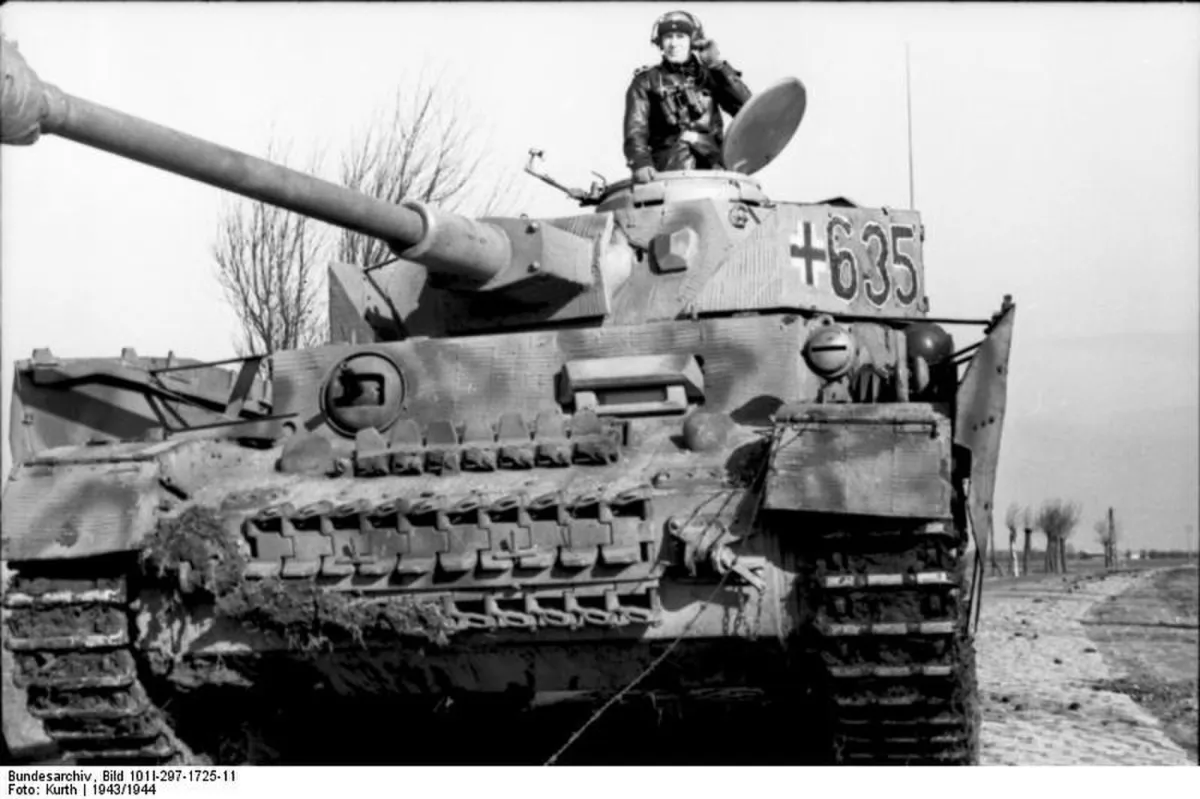
It was heavy work. The Dec. 29, 1943, order listed about 155 pounds (70 kg) for a StuG III, 220 pounds (100 kg) for a Panzer IV, 350 pounds (160 kg) for a Panther and 440 pounds (200 kg) for a Tiger I. It covered the surfaces a soldier could reach. Side skirts, stowage and anything that could interfere with moving parts usually stayed bare. Most vehicles got narrow horizontal ridges, though some factories used squares or a waffle pattern.
The list of coated vehicles is long: Panzer III and IV, Panther, Tiger I, Tiger II, StuG III, Jagdpanzer IV, Jagdpanther, Brummbär and the Elefant, among others.
Timing is murky. The Tank Museum says factory application began in August 1943. Panzerworld says Tigers got it first in August, Panzer IVs and Panthers in September, and the formal order for the full list of vehicles came Dec. 29, 1943.
Why it vanished in September 1944
On Sept. 9, 1944, application was ordered to stop immediately. Field units kept at it until Oct. 7, according to Wikipedia. The stated cause was a rumor: that enemy shells could set the Zimmerit on fire and destroy the tank.
The rumor was not entirely crazy. The solvent could flare when workers torched the paste, and The Tank Museum notes that a coat that had not fully hardened could still hold flammable benzene. Natural hardening could take up to eight days.
But the test that followed went the other way. That November, the Germans fired armor-piercing, shaped-charge, high-explosive and incendiary rounds at a Zimmerit-covered T-34 that had dried for five days and been warmed to 95 degrees F (35 C). Nothing ignited the coating, not even burning phosphorus that landed on it. Application was never restarted.
The weapon that never got copied
Sources disagree on what really killed Zimmerit. Wikipedia also points to production: smearing and drying the paste added days to every vehicle when Germany was short of tanks. The Tank Museum says the process was dropped because no Allied nation ended up using magnetic anti-tank mines, making the effort wasted. Panzerworld calls that its own best guess, not a documented fact.
Germany was the only country to use magnetic anti-tank mines in significant numbers. The coating guarded against a threat that, in the end, only the Germans had built. After the war, man-portable rockets like the bazooka made magnetic mines obsolete, and Zimmerit disappeared with them.
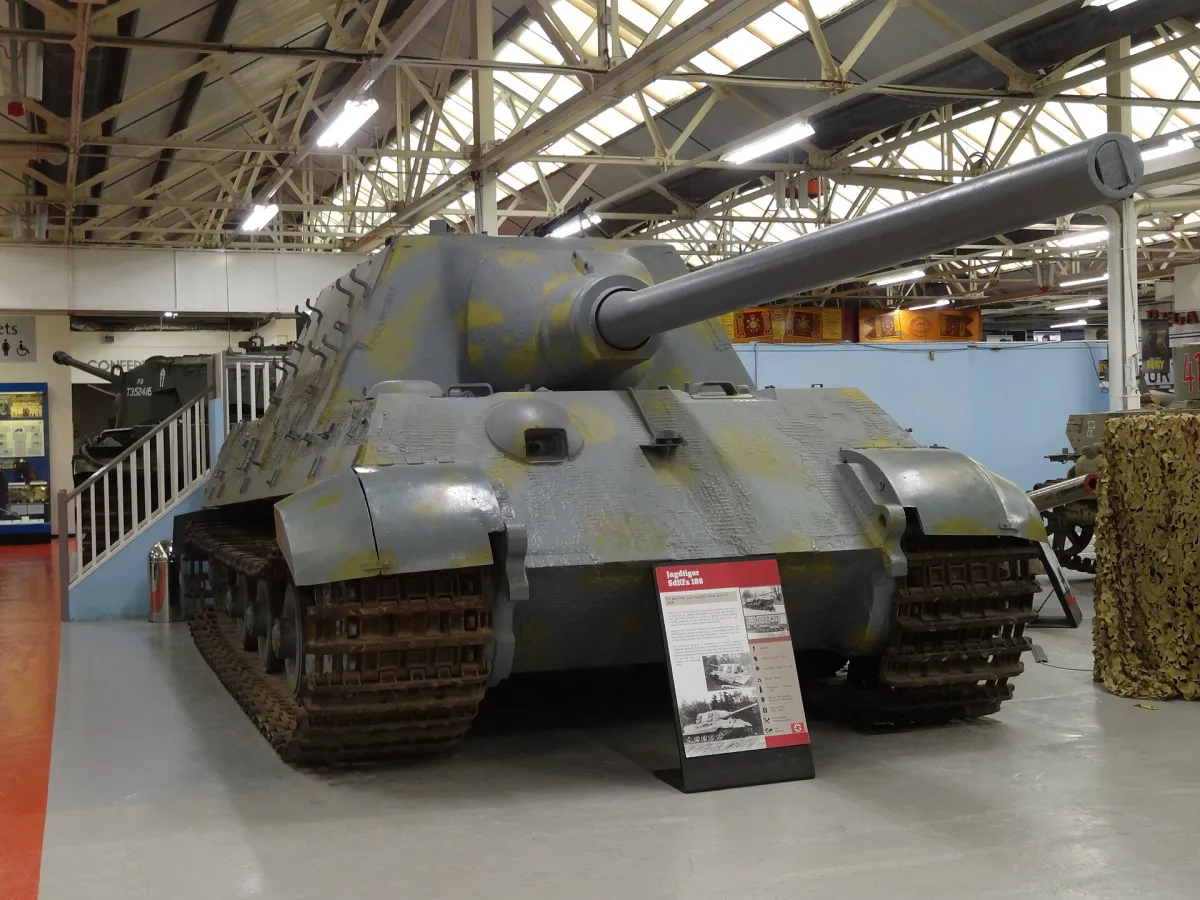
Some of the paste survives. The Tank Museum says original Zimmerit is still on its Jagdtiger and on its Tiger II with the production turret.
So did it work?
Nobody in the sources above documents a case either way. The Tank Museum calls Zimmerit "not fully anti-magnetic": the thickness and ridges were meant to make a magnet harder to seat. What the record does show is a costly fix, applied to a long list of German vehicles, then abandoned over a rumor that did not hold up.
Sources
- The Tank Museum, "Zimmerit and Why" (Ian Hudson, March 16, 2020)
- Panzerworld, "Zimmerit: Development History" (Christian Ankerstjerne)
- Wikipedia, Zimmerit (composition, cessation dates, vehicles)
- Wikipedia, Hafthohlladung (weight, penetration, production)
- Wikimedia Commons, Category: Zimmerit (photo archive and licenses)